Fungal Nails
A common infection that occurs when a microscopic fungus enters one or more nails — often beginning as athlete’s foot — causing nails to discolour, thicken and develop crumbling edges.
What are fungal nails?
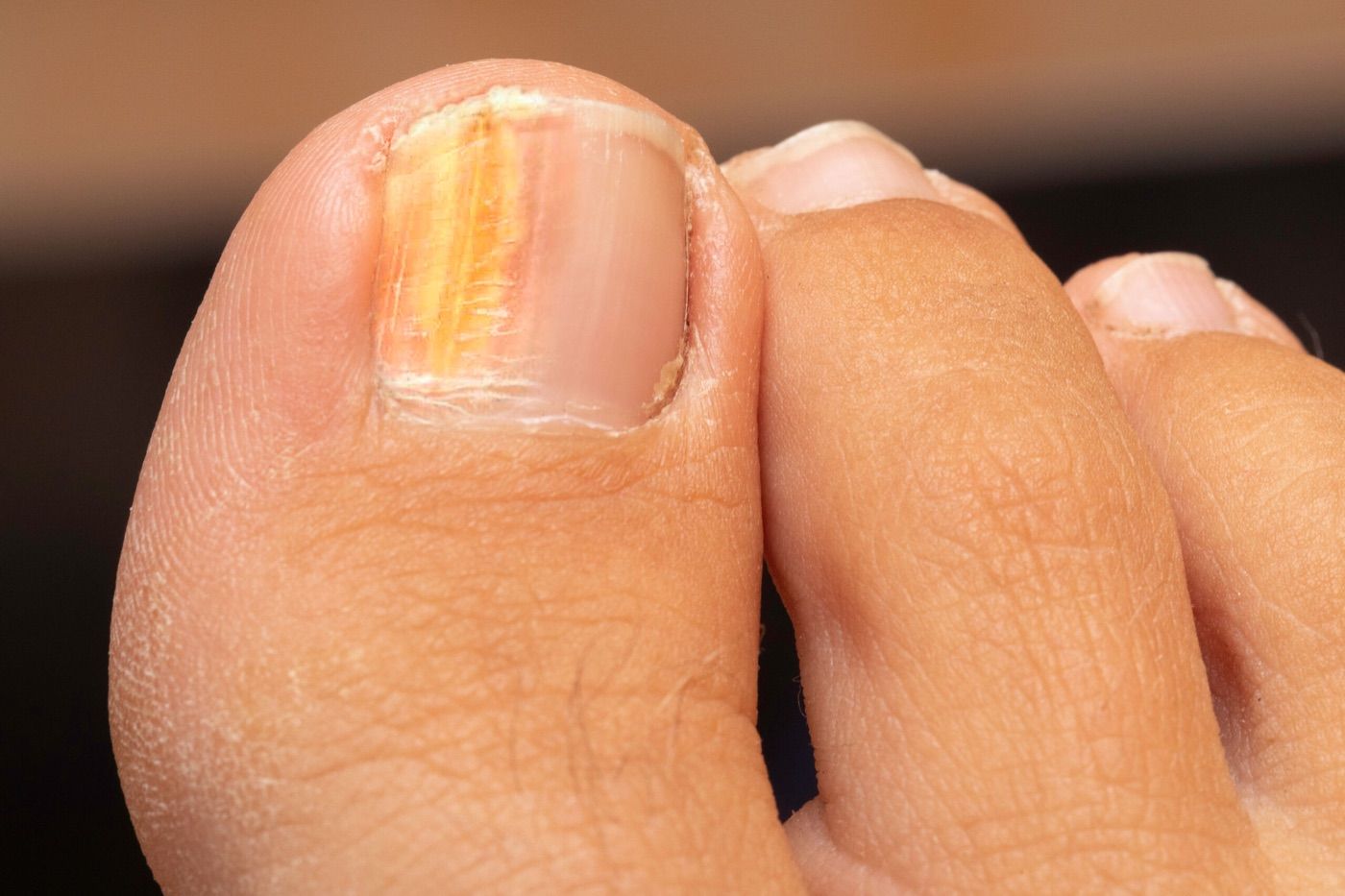
Nail fungus is a condition that occurs when a microscopic fungus enters one or more nails. It often begins as an infection in the skin called tinea pedis — commonly known as athlete’s foot. As the fungus penetrates deeper into the nail, it may cause the nail to discolour, thicken and develop crumbling edges, becoming an unsightly and potentially painful problem.
What causes fungal nail infections?
The causative pathogens include dermatophytes (organisms that feed on dead skin and nails), Candida (a type of yeast) and mould. These microscopic organisms thrive in dark, warm, moist environments — the insides of shoes being a perfect habitat. Injured or cracked nails provide an opening for fungi to enter and infect the nail bed, and repeated trauma from sport or tight footwear increases susceptibility. People with diabetes are often more prone due to circulation issues and a compromised immune response.
Symptoms
- Yellow, brown or white discolouration
- Thickening of the nail plate
- Brittle or crumbling edges
- Distorted or lifting nails
Treatments we offer
- Diagnostic fungal testing
- Lacuna fenestration
- Topical antifungal therapy
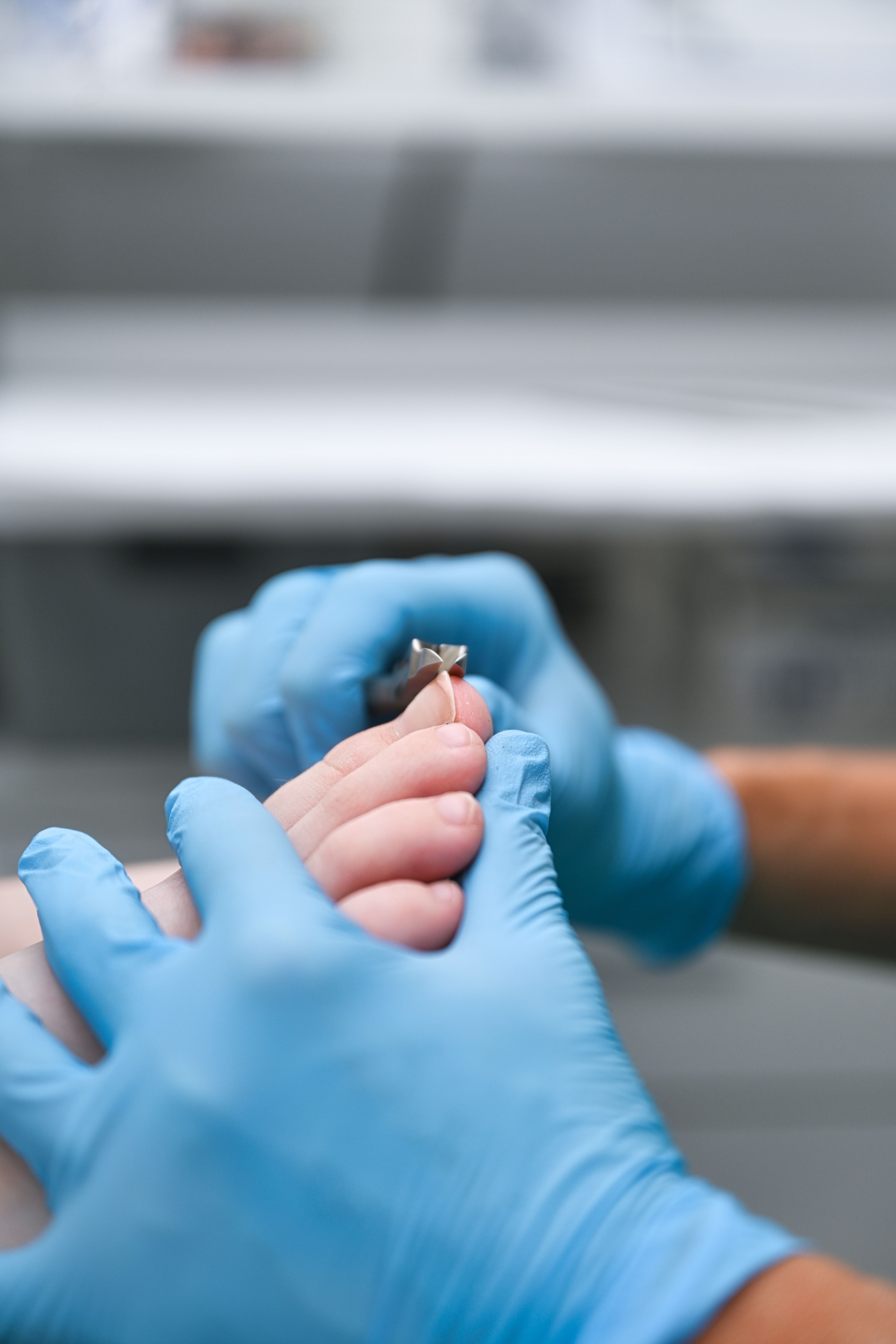
- Nail reduction & medical pedicure