Ingrown Toe Nails
An ingrown toenail occurs when the edge of the nail grows into or presses against the surrounding skin, causing pain, redness, swelling and sometimes infection. At ChilternWellbeing Foot & Ankle Clinic, our podiatrists treat ingrown toenails at all stages, from painful or irritated nail edges to recurrent and infected ingrown toenails. Treatment may be as simple as carefully removing the troublesome section of nail or, for recurring problems, minor nail surgery under local anaesthetic to provide a longer-term solution.
What causes and ingrown nail?
An ingrown toenail develops when the edge of the nail presses into or breaks the surrounding skin. It most commonly affects the big toe and can become increasingly painful if left untreated. Common causes include cutting the nails too short or down the sides, tight-fitting footwear, trauma to the toe and naturally curved or involuted nails. Some people are simply more prone to ingrown toenails because of the natural shape of their nails. Symptoms can include pain or tenderness along the side of the nail, redness, swelling and inflammation. As the condition progresses, you may notice bleeding, discharge or overgrown skin around the nail. If infection develops, the toe may become increasingly painful, swollen and warm. If your ingrown toenail is painful, keeps returning or shows signs of infection, we recommend having it assessed by a podiatrist rather than trying to cut it out yourself.
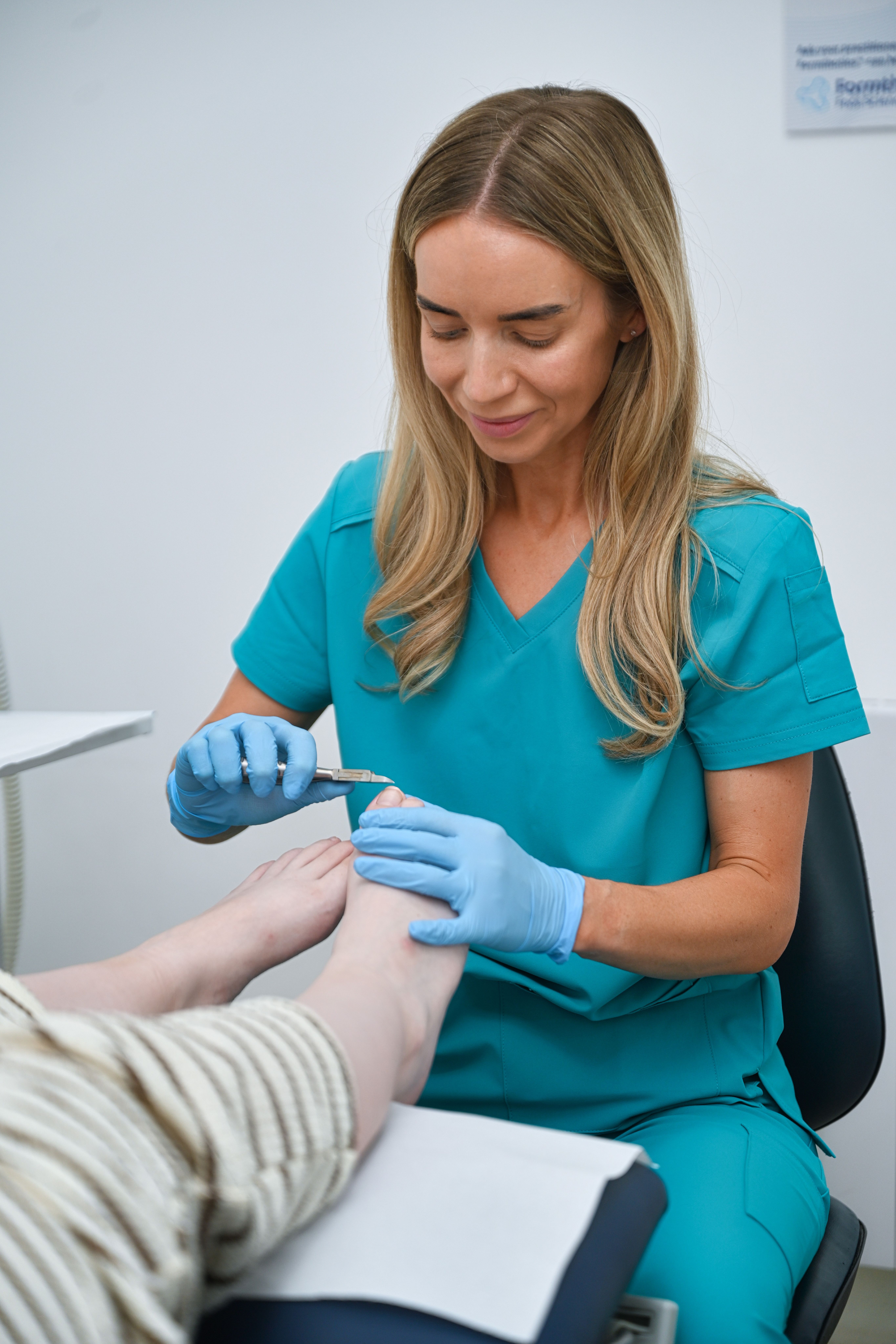
How is an Ingrown nail treated?
Treatment depends on how severe the ingrown toenail is and whether it is a one-off problem or keeps returning. For mild cases, our podiatrists can carefully remove the troublesome section of nail, clear the nail edge and reduce pressure on the surrounding skin. This can often provide immediate relief without the need for surgery. If the ingrown toenail is severe, repeatedly becomes painful or infected, or continues to grow into the skin, nail surgery may provide a longer-term solution. This is a minor procedure carried out under local anaesthetic, where part or, occasionally, all of the affected nail is removed. The nail-producing tissue can also be treated to help prevent the problematic section from growing back. Signs of infection can include increasing redness, swelling, warmth, throbbing pain, pus or discharge around the nail. Redness that is spreading beyond the toe, red streaking, fever or feeling generally unwell requires prompt medical attention. People with diabetes, poor circulation or a weakened immune system should seek professional advice early rather than attempting to treat an ingrown toenail themselves. Your podiatrist will assess the toe, check for signs of infection and discuss the most appropriate treatment option with you.
What happens during Nail Surgery?
Ingrown toenail surgery is a minor procedure carried out under local anaesthetic, so the toe is completely numb during treatment. In most cases, only the problematic section of nail is removed. Occasionally, the whole nail may need to be removed. A chemical called phenol is then usually applied to the nail-producing tissue to help prevent the troublesome section from growing back. After the procedure, your toe will be covered with a protective dressing. As the local anaesthetic wears off, you may experience some mild discomfort or throbbing, which can usually be managed with appropriate pain relief. A small amount of bleeding or clear/yellowish discharge from the area can be normal during the healing process, particularly when phenol has been used. You will need to keep the dressing clean and follow the aftercare advice given by your podiatrist. You can usually walk after the procedure, although we recommend taking it easy for the rest of the day and wearing roomy or open-toed footwear that does not put pressure on the toe. You will be invited back for a follow-up appointment so we can check the toe, change the dressing if required and make sure it is healing as expected. Healing varies between patients and can take several weeks. Your podiatrist will guide you on returning to exercise, swimming and other activities as your toe heals.
What to expect
- A friendly welcome and complete medical history review.
- Clinical assessment and clear explanation of findings.
- Treatment delivered with your consent at every step.
- A personalised plan including follow-up and prevention.